

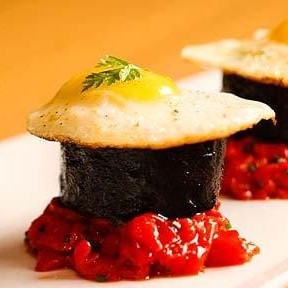
Morcilla Iberica, piquillo pepper and quail eggs

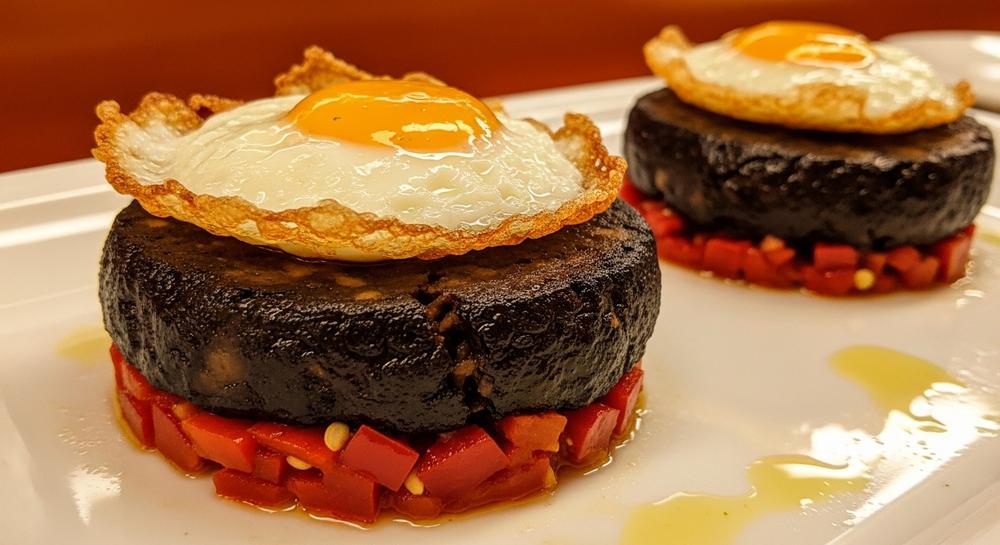
There’s a plate at a bar in Pamplona that I think about when I’m eating breakfast on autopilot elsewhere: sliced morcilla, roasted piquillo peppers, and a barely-set quail egg on top. It sounds simple until you taste it—the silky yolk running into the earthiness of the morcilla, the sweetness of the pepper cutting through the richness. That plate made me understand that cooking isn’t about complexity; it’s about choosing the right ingredients and stopping before you ruin them.
The Story Behind This Dish
Navarra, the region where this dish is most common, is home to three of Spain’s greatest ingredients: morcilla, piquillo peppers (which are protected by denomination of origin), and access to exceptional quail eggs. The combination wasn’t invented by a chef; it emerged from the pragmatism of Spanish food culture—using excellent ingredients without fussing. Premium Morcilla Iberica de Bellota gains its character from the acorn-fed pork and careful spicing. Hand-roasted Piquillo peppers from Lodosa add sweetness and a subtle char. Quail eggs—smaller, richer, and more delicate than chicken eggs—add richness and a moment of luxury. The quail yolk is the crucial element; it’s what makes this more than just assembled components.
Ingredients
- 1 premium Morcilla Iberica de Bellota sausage (about 150g)
- 8–12 roasted Piquillo peppers
- 4 fresh quail eggs
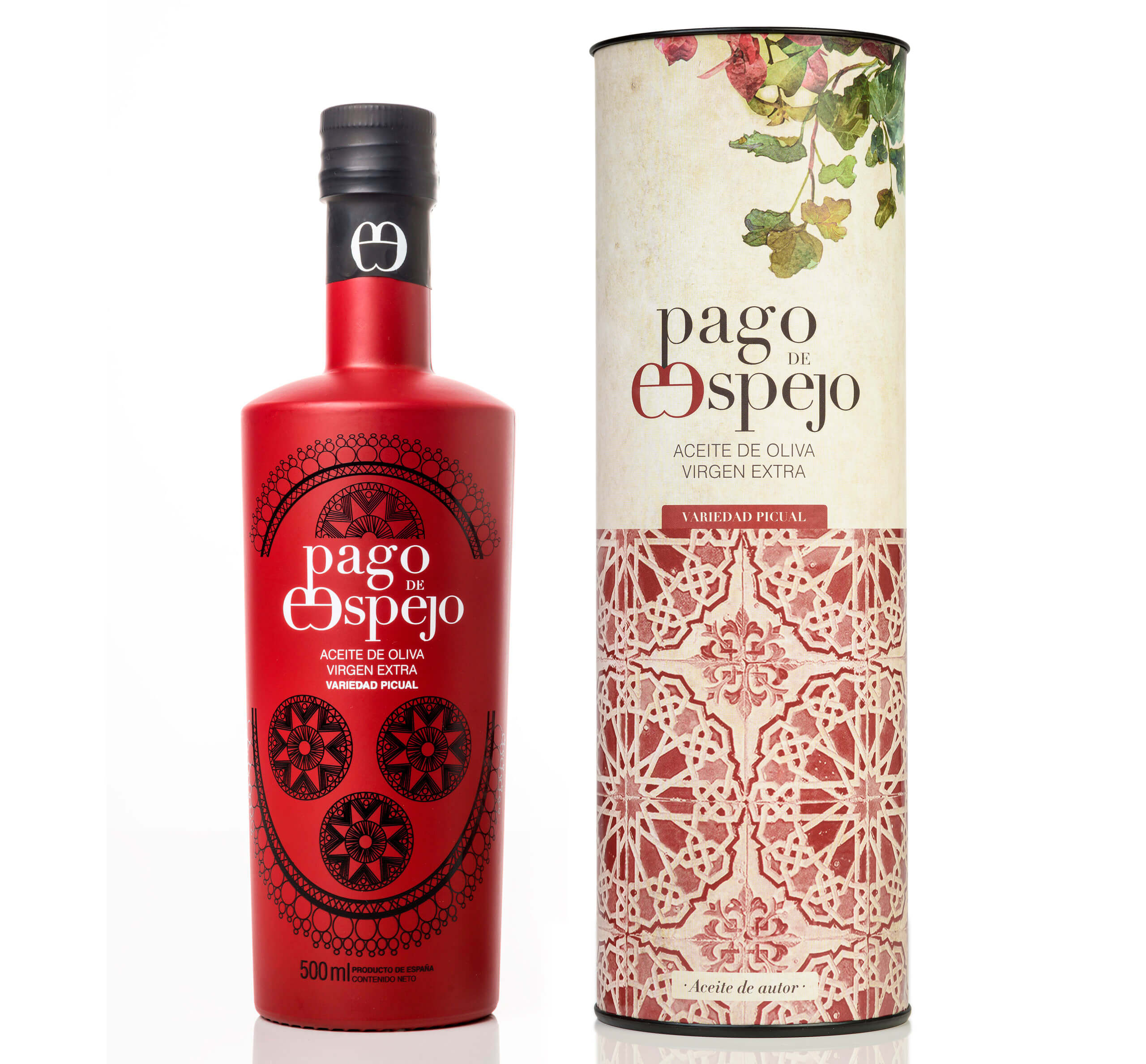
- 2 tablespoons extra virgin olive oil
- 1 small shallot, very finely minced
- ½ tablespoon aged sherry vinegar
- Sea salt and freshly ground black pepper
- Optional: microgreens or fresh herb shoots for garnish
How to Make It
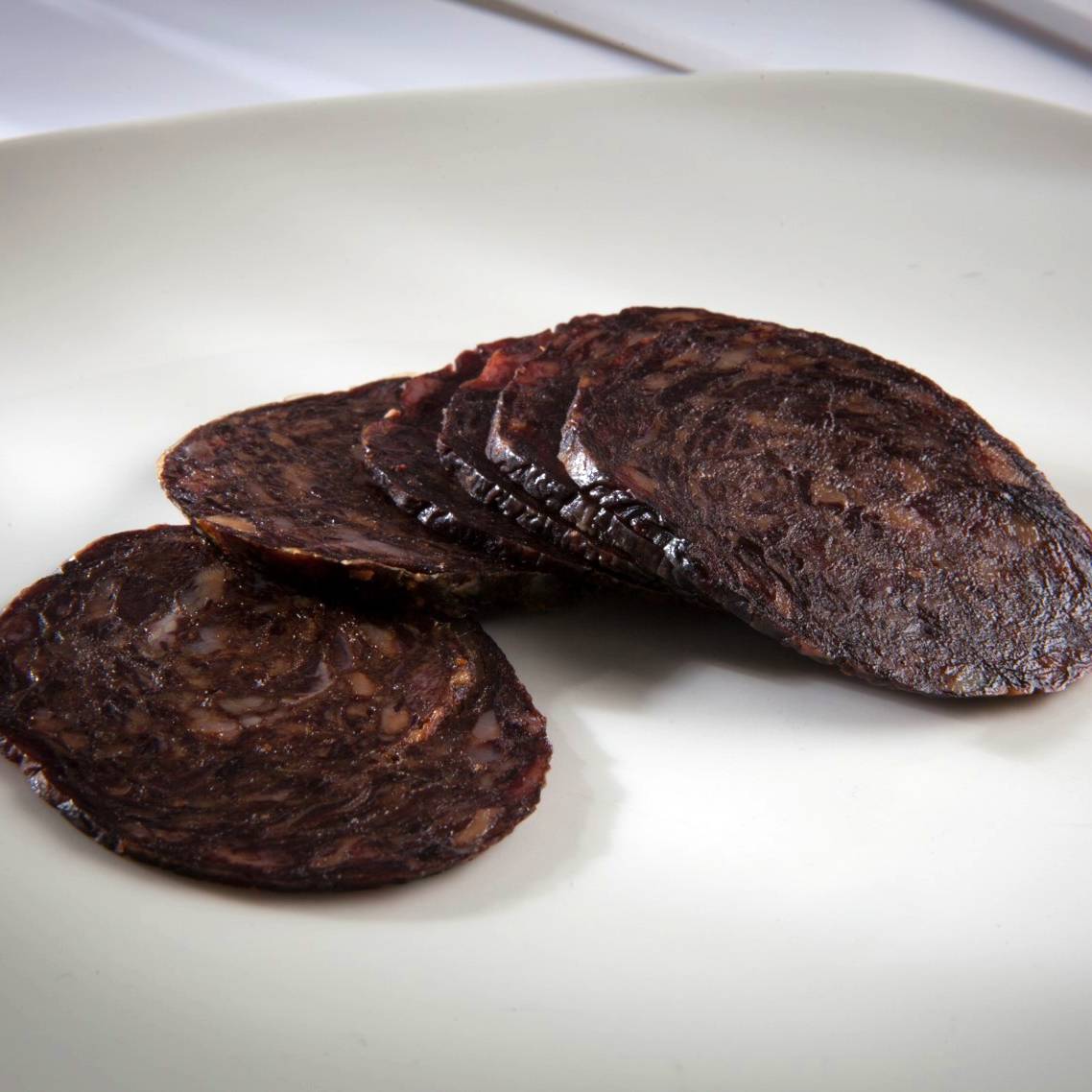
- Slice the morcilla. Cut the morcilla into rounds about ½ inch thick. Be gentle; morcilla has a delicate casing. A sharp knife and a light hand are all you need. Don’t squeeze or press the slices. If the morcilla is cold, it will hold its shape better when slicing.
- Warm the piquillo peppers. If using jarred peppers, you can serve them at room temperature or warm them gently in a 300°F oven for 5 minutes. If you want to get fancy, you can warm them in a small pan with a touch of olive oil and a whisper of sherry vinegar. They should be warm but not hot—you want them pliable but not falling apart.
- Cook the quail eggs. Heat a small non-stick skillet over medium heat with a touch of olive oil. Crack the quail eggs carefully into the pan. They cook very quickly—about 2–3 minutes for a runny yolk, which is what you want. The whites should be set but the yolk should jiggle. Season lightly with salt and pepper. If you prefer, you can bake the eggs in a 350°F oven for 4–5 minutes, which gives you more control.
- Warm the morcilla gently. In a separate small skillet over medium heat, add a touch of olive oil and arrange the morcilla slices. Warm them gently for 1–2 minutes per side until they’re heated through and the edges begin to caramelize slightly. They should have a light golden color, not be crispy. The goal is warmth and tenderness.
- Assemble the plate. This is where care matters. Arrange 2–3 piquillo peppers on a small plate or wooden board. Lean the warm morcilla slices against the peppers. Place a quail egg on top of the morcilla or in the center of the plate. The warmth of the morcilla will help keep the egg yolk running.
- Make a quick dressing. While everything is cooking, whisk together olive oil, sherry vinegar, minced shallot, and a tiny pinch of salt. This should be light and bright—not a heavy vinaigrette. Drizzle around the plate, not over the quail egg.
- Serve immediately. This is a dish that doesn’t wait. The quail egg needs to be warm with a runny yolk; the morcilla needs to be warm; the peppers need to be pliable. You have maybe 3 minutes after cooking before things cool down. Time your steps accordingly.
Tips for the Best Result
- The quail egg yolk is non-negotiable. This entire dish exists to showcase that runny, rich yolk. If you cook the egg until it’s set, you’ve missed the point. Medium-cooked (runny yolk, set whites) is the target. The diner should be able to cut into the yolk and have it run into the morcilla and pepper.
- Don’t overcomplicate the warming steps. You’re not trying to cook anything here; you’re bringing components to serving temperature. Gentle heat, brief timing, and careful handling are all you need.
- Use the best morcilla and piquillo you can find. Artisanal Morcilla Iberica de Bellota and peppers from Lodosa are worth the cost. This dish has so few components that each one matters enormously. There’s nowhere to hide mediocre ingredients.
- Plate individually, not in advance. This dish is best made one or two portions at a time. If you’re cooking for more than two people, make it in batches. Assembled plates lose their magic quickly.
- Have everything prepped and ready. Slice the morcilla, have the peppers ready, get the eggs to room temperature (they cook more evenly), and have your plates warm. The actual cooking is maybe 5 minutes; the prep determines whether it goes smoothly.
Wine Pairing
The richness of quail egg and morcilla paired with the sweetness of piquillo peppers calls for a wine with body and a touch of spice. A young Rioja Tempranillo or a slightly spicy Garnacha complements the dish beautifully. The wine’s tannins cut through the egg and morcilla while its fruit echoes the pepper’s sweetness. A chilled rosé from Navarra (the home region of piquillo peppers) is also perfect—it has enough body to stand up to the richness while providing refreshment.
Frequently Asked Questions
Where do I buy quail eggs?
Quail eggs are increasingly common in better grocery stores, farmers markets, and specialty food shops. They’re also available online. Look for ones that are clean and have no cracks. If you absolutely can’t find them, you can use small chicken eggs, but the richness and delicacy will be different.
Can I poach the quail eggs instead of frying them?
Yes. Bring a small pot of salted water with a touch of vinegar to a gentle simmer. Crack the quail egg into the water and let it poach for 2–3 minutes until the white is set but the yolk is still runny. Quail eggs poach even faster than chicken eggs, so watch carefully. Poaching gives them a slightly more delicate presentation, but fried is traditional and easier.
Can I make this vegetarian?
No, not really. The morcilla is the centerpiece. You could make a version with just piquillo peppers and quail eggs, but it wouldn’t be the same dish. If you’re feeding vegetarians, make a different tapa.
Ingredients
- Piquillo Peppers
- Morcilla 100% Iberica de Bellota
- Quail Eggs
- Chopped Chives
- Garlic Clove
- Thyme Pepper
- Olive Oil
How to prepare
- Begin by slicing your Morcilla 100% Iberica de Bellota from Iberico Club into equal 1-inch parts. (This Morcilla is dry-cured and does not need to be cooked)
- Next, grab a handful of Piquillo Peppers and dice them finely
- Place the finely chopped Piquillo Peppers into a pan and stir-fry them with approximately 2 teaspoons of olive oil; while stir-frying, add 1/2 ounce of chopped chives, 1 garlic clove and sprinkle thyme over the top
- In a separate frying pan, crack 2 quail eggs into the pan, and cook them until the yolks are hard, or cooked to your desire.
- Plating: Begin by serving the finely diced piquillo peppers in a plate as the base of a dish, then, continue by placing the 1-inch morcilla you cut earlier over the piquillo peppers, and last, follow by placing the quail eggs over the morcilla.
‣ For the best delicacies from Spain in the USA visit us at IbericoClub.com
‣ View our free Tapas Academy video recipes!

Comments