

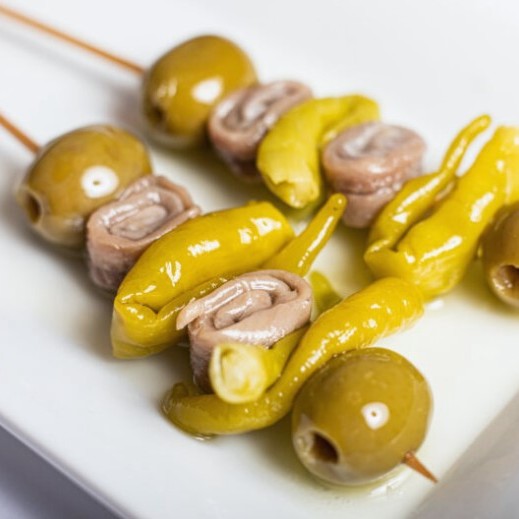
The Iconic Gilda de Anchoa from San Sebastian

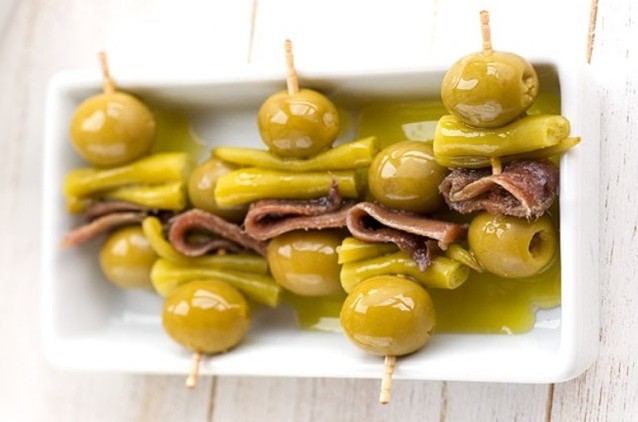 The first time I tried Gildas was at a bar in San Sebastián, standing at a counter that had seen a hundred years of conversation and wine spilled on its wood. They were lined up in a glass case like edible architecture—an olive, an anchovy, a piquillo pepper, skewered on a cocktail pick. I ordered three. By the end of the night, I’d eaten a dozen. There was something about the simplicity that made them impossible to stop eating. Years later, when we started sourcing gildas from Spain, I understood why: they’re not appetizers. They’re rituals.
The Story Behind This Dish
Gildas come from the Basque Country, specifically from the txoko (private eating clubs) where serious food traditions are maintained outside the view of tourists. The name allegedly comes from a 1946 film. The form is irrelevant. What matters is the combination: a Cantabrian anchovy, a green olive, a piquillo pepper, threaded onto a wooden pick. That’s it. No recipe, no technique, just ingredients of such quality that they don’t need interpretation.
This is a lesson that took me years to understand as someone in the food import business. In America, we’re taught that food marketing requires narrative, innovation, storytelling. Gildas don’t follow that rule. They’re purely the sum of their parts. A great anchovy, a great olive, a great pepper. The quality of each element determines the quality of the whole. You can’t hide behind technique or presentation. You can’t use inferior ingredients and compensate with clever preparation.
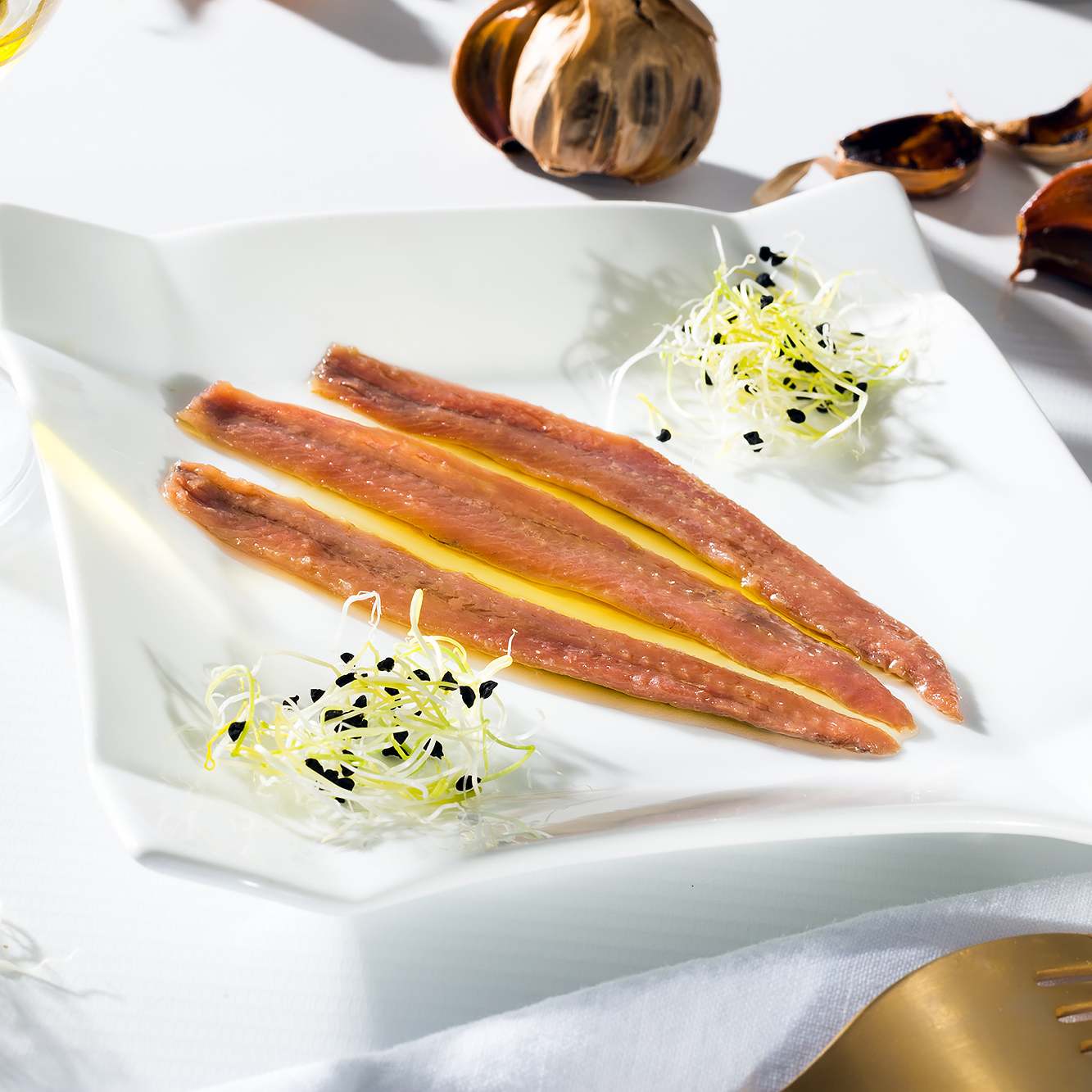
When people say they don’t like anchovies, what they usually mean is they’ve never had a real anchovy. They’ve had the industrial versions—heavily salted, muddy in flavor, processed until they’re barely recognizable. A true Cantabrian anchovy tastes like the sea, but clean. Refined. It’s the opposite of what people expect. A gilda reveals that distinction immediately. You taste the anchovy first, then the brine of the olive, then the slight piparra peppers. By the third pick, most people understand they’ve been wrong about anchovies their entire life.
Ingredients
- 12-16 whole Cantabrian anchovy fillets (not canned, fresh or properly cured)
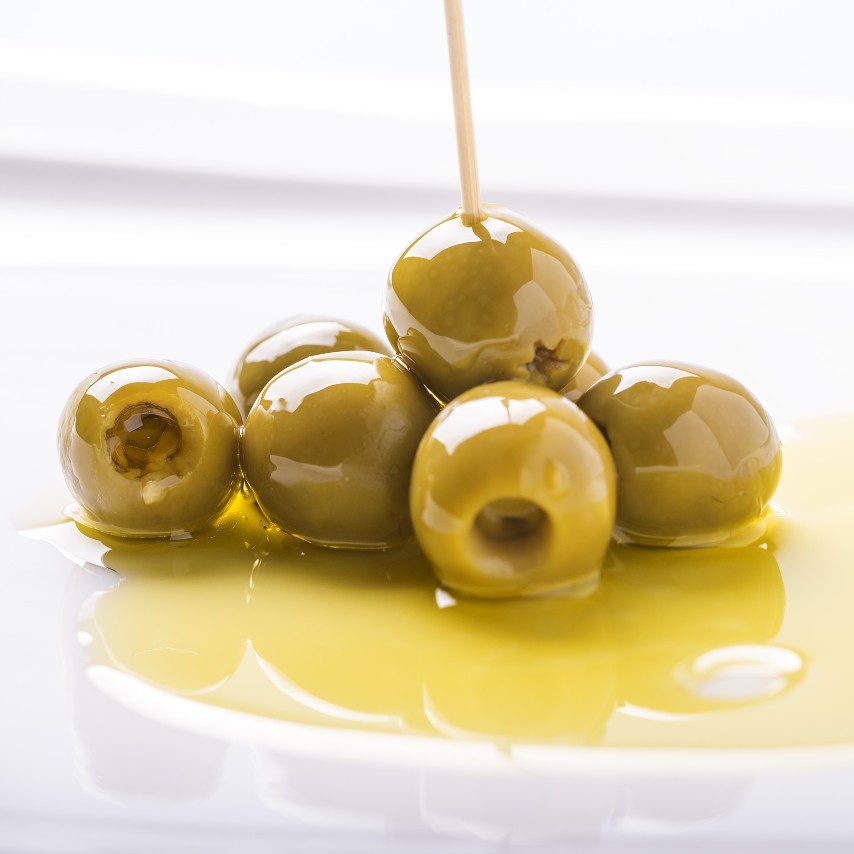
- 12-16 Spanish green olives, preferably from Andalucia (or use our hand-picked marinated olives)
- 12-16 piparra peppers
- 4 tablespoons extra virgin olive oil
- Wooden cocktail picks or small wooden skewers
- Sea salt and cracked pepper to taste
How to Make It
- Prepare your ingredients. If using fresh Cantabrian anchovies, rinse them gently under cold water and pat dry. They should be at room temperature. If using premium anchovy fillets, remove them from the tin or jar, rinse very lightly if they seem overly salty, and pat dry. Olives and piquillo peppers should also be at room temperature.
- Thread with intention. Take a wooden pick. Thread it through an anchovy fillet first (the pointed end of the pick goes through the center of the anchovy). Then thread a green olive. Then a piparra pepper (folded or rolled slightly so it slides on the pick). The order matters: anchovy, olive, pepper. This is how they’re assembled in San Sebastián, and there’s a reason—it determines how the flavors hit your palate as you eat.
- Arrange on a plate. Place your gildas on a small plate or wooden board. They should look casual but composed—not a pile, but an arrangement. In the txokos, they’re often stood up at angles, leaning against each other.
- The finishing touch. Drizzle very lightly with extra virgin olive oil. This is optional in some recipes, essential in others. A small drizzle adds richness and helps bind the flavors. Don’t oversaturate—a teaspoon for the whole plate is enough.
- Season carefully. A small pinch of sea salt over the arrangement. The anchovies and olives are already salty, so restraint is key. You’re amplifying, not adding. Black pepper is optional—some purists skip it entirely.
- Serve immediately. Gildas don’t improve with time. The longer they sit, the more the piquillo will soften and the olive will release its brine. They should be eaten fresh, within 15 minutes of assembly.
Tips for the Best Result
- The anchovy makes or breaks the gilda. A mediocre anchovy and perfect olive and pepper will still produce a mediocre gilda. Conversely, an exceptional Cantabrian anchovy can carry a good-but-not-perfect olive and pepper. Source your anchovy first. Everything else follows.
- Olives should be brined, not marinated in vinegar. Look for olives preserved in salt and brine, not bathed in vinegar. The brine provides salinity and subtle complexity; vinegar is too sharp and will overwhelm the delicate anchovy.
- Piparra peppers matter more than most people realize. The best option is to get a brand from the North of Spain (Navarra). These are essential to the balance of the gilda.
- Room temperature is crucial. Anchovies from the refrigerator will be firm and unapproachable. Bring them to room temperature 20 minutes before serving. Cold anchovies taste metallic and harsh. Warm anchovies taste clean and nuanced.
- Wooden picks matter. Metal picks transfer heat and change the experience. Wooden picks, which traditional gildas use, keep the focus on the food. It’s a small thing, but it’s the details that separate a gilda from a random combination of ingredients on a toothpick.
Wine Pairing
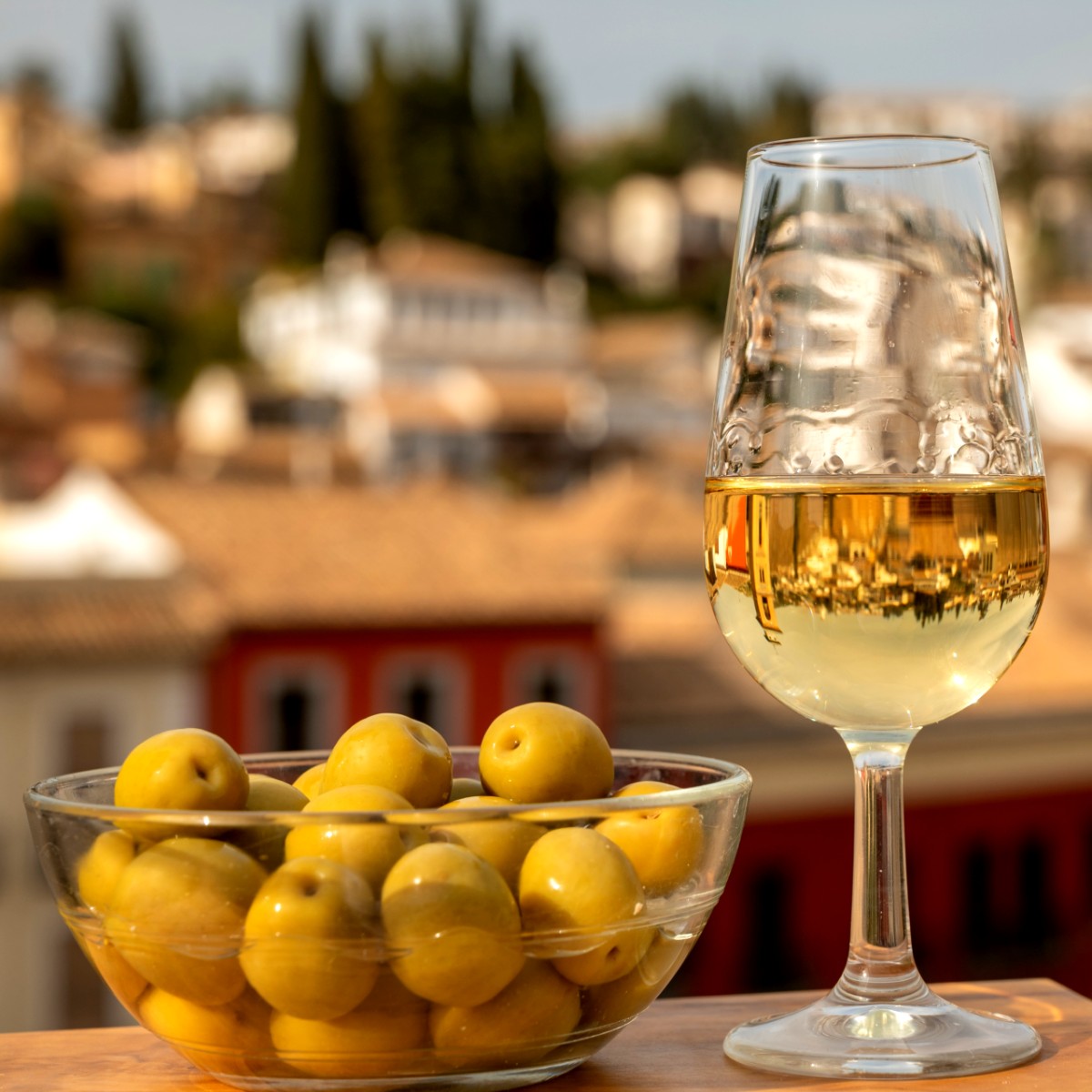
A dry sherry or vermouth is the only pairing that makes sense. The saline, almost briny quality of fino sherry echoes the brine of the olive and the sea-like quality of the anchovy. Vermouth—particularly a dry Spanish vermouth—adds herbal complexity that bridges all three elements. Avoid sweetness entirely. This is not a dish for dessert wines or fruit-forward options.
Frequently Asked Questions
Can I make gildas ahead of time?
You can assemble them up to an hour in advance, but they’re best eaten within 15 minutes of being put together. The piquillo will begin to weep (release its juices) after a while, and the overall texture and presentation suffer. If you’re entertaining, assemble them in batches as your guests arrive.
What if I can’t find Cantabrian anchovies?
The integrity of the gilda depends entirely on the anchovy. If Cantabrian anchovies aren’t available, it’s better to skip this dish than to substitute with inferior anchovies. However, if you have access to high-quality Spanish or Italian anchovies preserved in salt (not oil), those can work as a second choice. Avoid anything in a tin that looks mass-produced.
Are gildas meant to be a full meal or an appetizer?
In the Basque Country, they’re neither—they’re a pintxo (tapa), something you eat standing at a bar with a glass of wine, meant to be consumed quickly and followed by the next one. As a home cook serving them to guests, treat them as an appetizer. Serve 2-3 per person as part of a larger meal, or 4-5 if they’re the main event.
Ingredients
- 1 cup Pedro Ximenez wine
- 1/3 cup high quality extra-virgin olive oil
- 1 tin of Yurrita Premium Anchovy fillets.
- Bread to serve
How to prepare
- Heat wine in saucepan on medium-high heat until reduced by half. Let cool.
- Pour olive oil onto a large plate. Dot with spoonfuls of reduced wine and arrange anchovies on top. Serve with warm bread.
‣ For the best delicacies from Spain in the USA visit us at IbericoClub.com
‣ View our free Tapas Academy video recipes!

Comments